Garage floor flake colors: how to choose one you'll still like in 2029
Color is the part everyone enjoys picking and the part most people overthink. Here's how to narrow 25 blends down to one in about ten minutes, and the two or three practical things worth knowing before you do.
Two things to get out of the way up front.
First, the color has nothing to do with how long the floor lasts. Durability comes from the grinding, the repairs, and the polyaspartic top coat — all identical no matter which blend you point at. So there's no "tougher" color and no wrong answer in a performance sense.
Second, all our blends are the same price. Nobody has to talk themselves into a color they like less to save money, because there's nothing to save. Price follows square footage and the shape your slab is in, which is covered in the cost guide.
That leaves the actual question: which one will you still be happy with in five years, after the garage has been used like a garage?
Start here: what a flake floor actually is
A flake floor is a base coat, a full broadcast of colored vinyl chips thrown into it while it's wet, and a clear polyaspartic top coat over everything. "Full broadcast" means we keep throwing flake until the floor won't take any more — the base underneath ends up completely hidden.
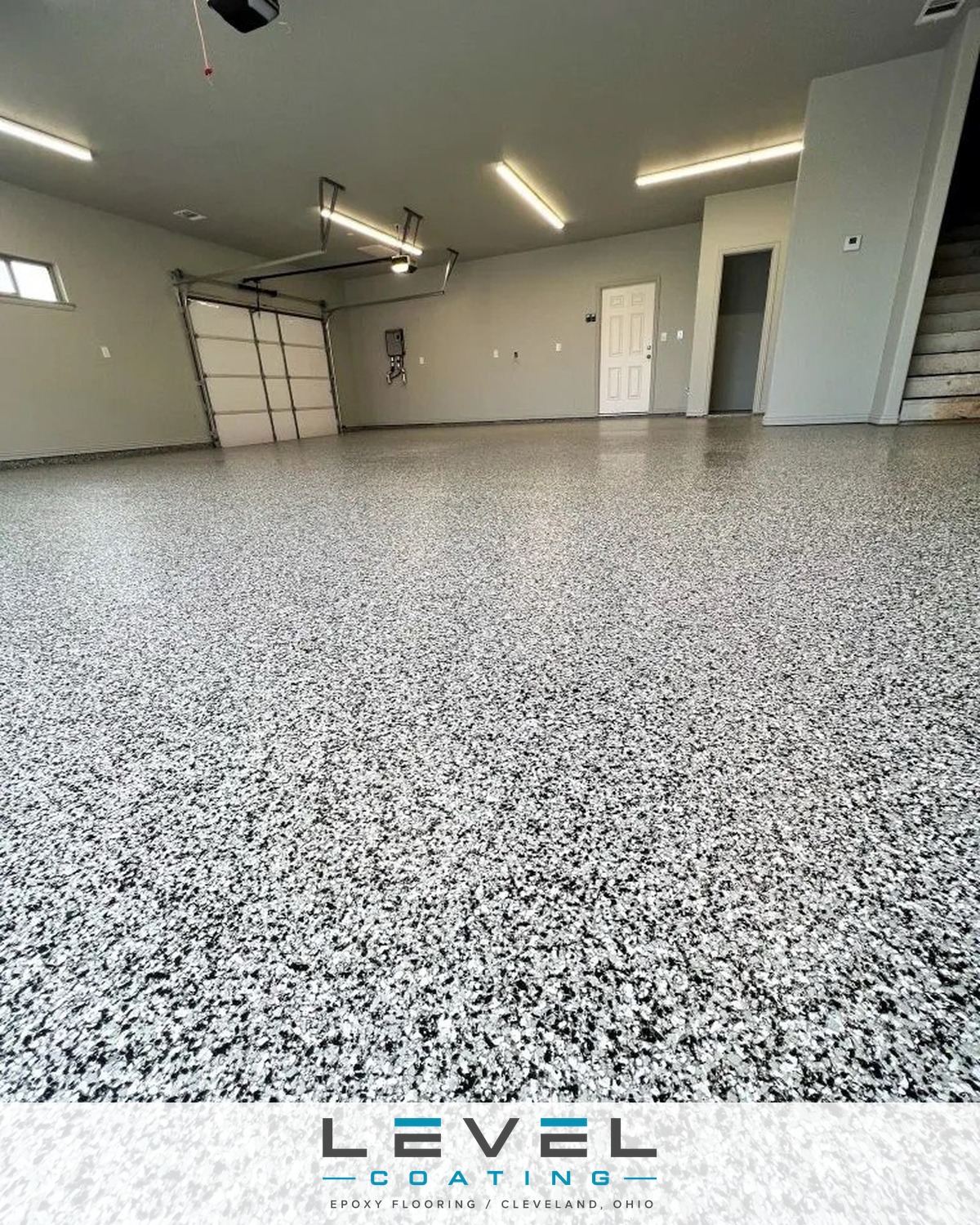
That matters for color, because it means the base color barely shows. What you see is the blend: a mix of four or five different flake colors that reads as one tone from standing height and shows its individual chips when you look down at your feet. It's why a floor can look plain gray across the garage and turn out to have black, white, tan and blue chips in it up close.
It also means the floor is textured, not smooth. Flake gives grip, which is a real advantage on a surface that gets wet every time a snow-covered car pulls in.
The one rule worth following: contrast hides dirt
If you take only one thing from this page, take this.
Garages get two kinds of visible mess. Dust, drywall grit, salt residue and pollen — all of which read light. And tire marks, oil spots and general grime — all of which read dark.
A blend that contains both light and dark flakes hides both. A blend that's close to solid shows everything: a near-black floor turns dusty and gray a week after it's cleaned, and a near-white floor advertises every tire scuff and drip.
This is why the busiest blends tend to be the mid-tone ones with obvious speckle. They're not a compromise, they're the floors that keep looking clean while being used. If your garage is a working space — tools, bikes, a project car, kids running through with a hose — bias toward contrast.
If your garage is more of a showpiece and gets swept weekly, you have more freedom. Just go in knowing what you're signing up for.
Light or dark? Look at your lighting first
Most garages around Cleveland have one or two ceiling fixtures and one small window, if that. From November to March there's very little natural light getting in there at all.
A dark floor in a dark garage makes the whole space feel like a cave. It looks fantastic in photos taken under bright lights and much less fantastic at 6pm in January when you're trying to find a dropped socket.
Lighter and mid-tone blends bounce what light you have and make the garage feel bigger and cleaner. If you're set on something dark, it's worth budgeting for better lighting at the same time — it changes the room more than the floor color does.
Worth noting: a coated floor of any color is dramatically brighter than the bare gray concrete it replaces, because the top coat reflects light instead of absorbing it. Even the darker blends usually leave a garage lighter than it was.
What about metallic floors?
Metallic finishes come up a lot, usually after someone has seen a swirled, marbled floor that looks like polished stone. They do look spectacular, and there's a reason they show up in showrooms, retail spaces and finished basements.
For a working garage in Ohio, we install full flake instead, and here's the honest reasoning. A metallic floor is a smooth, high-gloss surface. Smooth means less grip — noticeable when the floor is wet with snowmelt. Gloss means it shows tire marks, scuffs and dust far more readily than a speckled floor does. And the marbled effect is a hand-poured, one-off pattern, which is beautiful in a living space and a lot of exposure in a room where you park two cars and drag a snowblower across the floor.
Flake gives you the grip, the dirt-hiding, and a finish that's consistent from wall to wall. In a garage, that's the better trade.
Pick it by looking at it, not by reading names
Blend names are marketing. Basalt, Domino, Coyote, Frostbite, Tidal Wave — they tell you nothing about whether a floor will suit your garage, and two blends with completely different names can look nearly identical from six feet up.
So don't shop by name. Look at them.
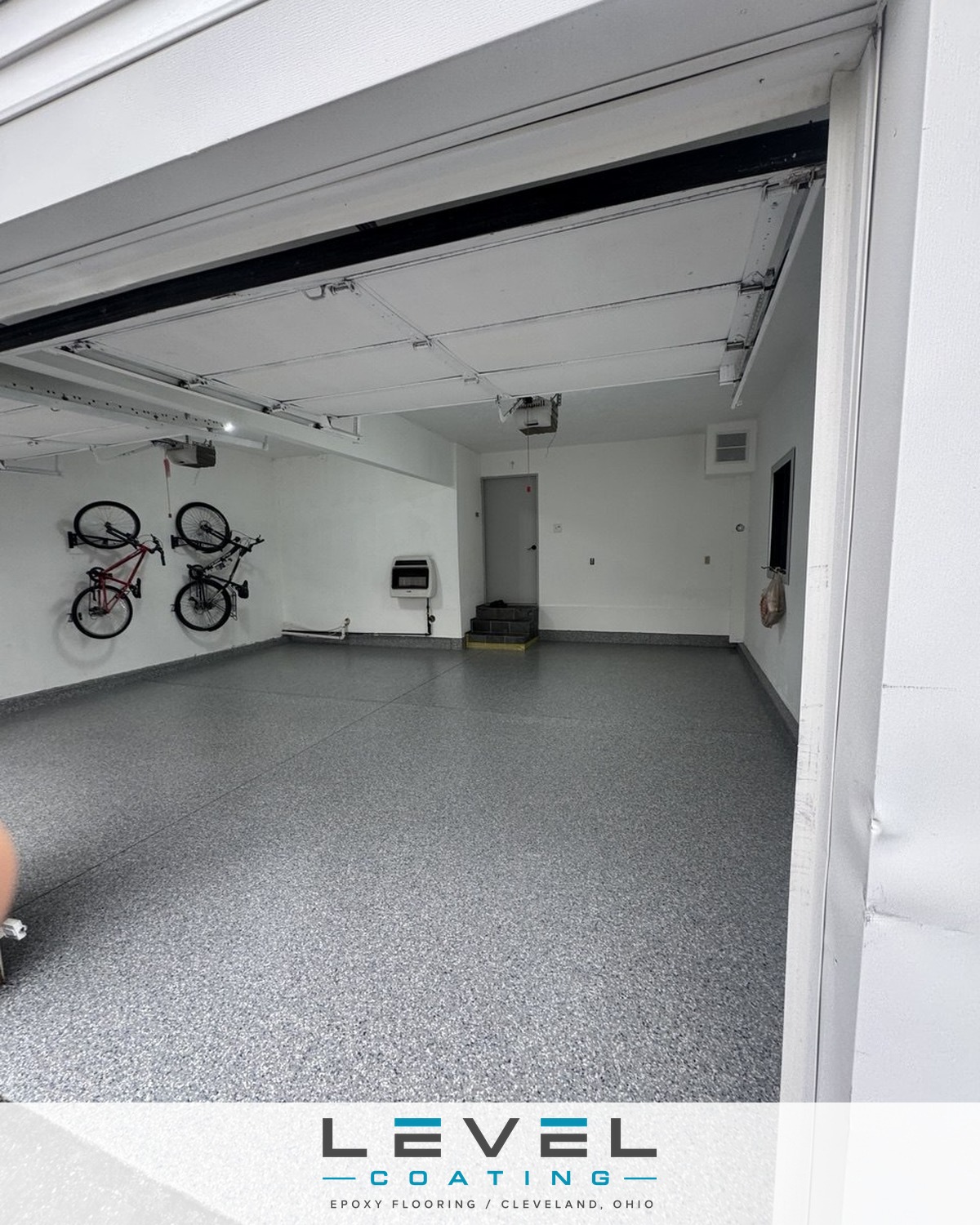
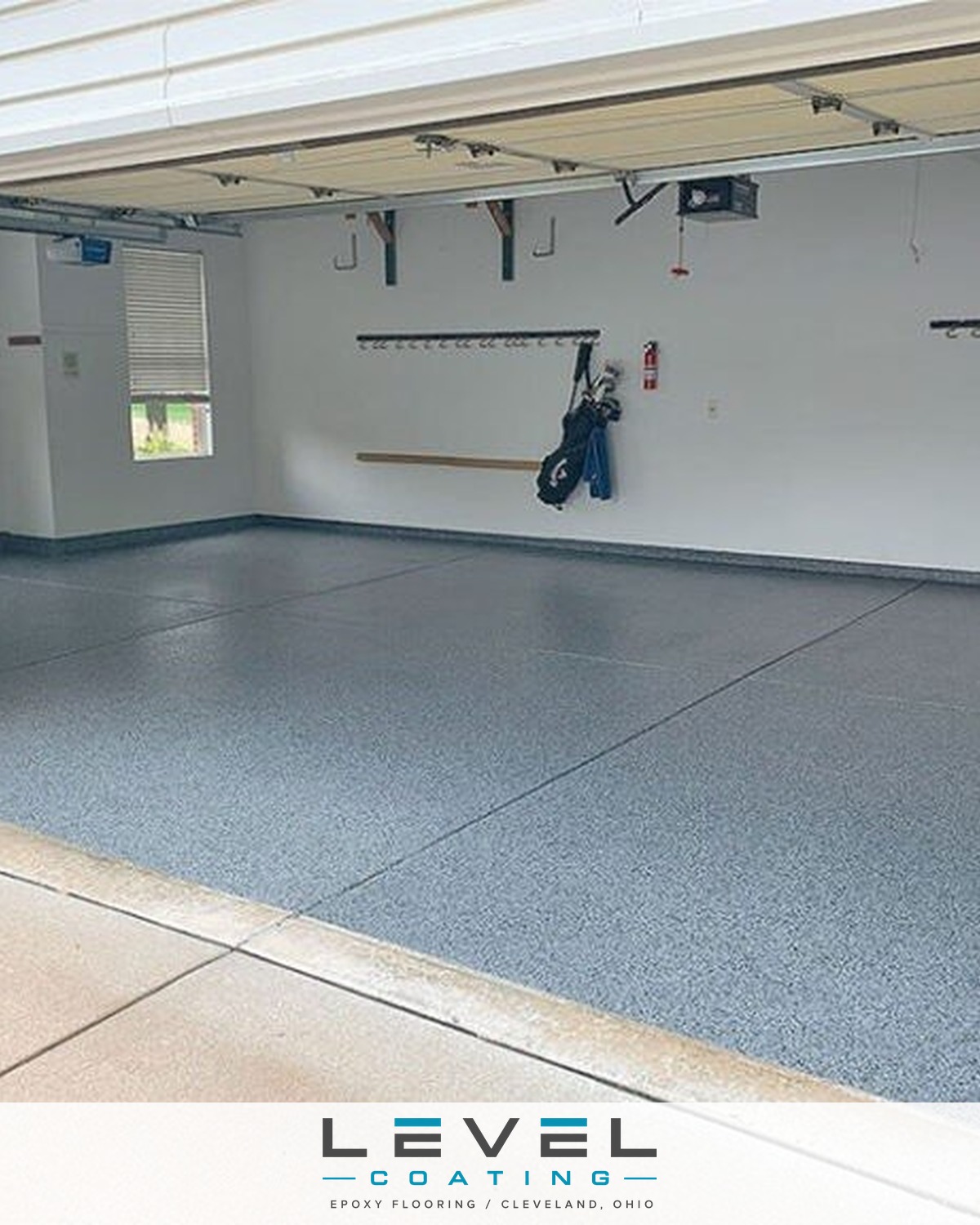
We built a tool for exactly this: the floor designer puts each of our 25 blends onto a photo of a real garage floor, and shows a close-up of the actual flake structure beside it. Two views matter here, and most color charts only give you one. The wide shot tells you how the floor reads as a whole — which is the impression you'll have every day walking in. The close-up tells you what's actually in the blend, which is what you see standing on it. A floor that looks like flat gray from the doorway can be full of blue and white chips underfoot, and you'd never know that from a paint-chip-sized swatch.
Click through a few. Most people know within two minutes which three they're choosing between, and the tool is much faster than trying to imagine it.
A screen is not a garage
Every monitor renders color a little differently, and your garage lighting will shift it again — warm bulbs pull a floor yellow, cool LEDs push it blue, and daylight through an open door changes it a third time.
So use the designer to narrow down, not to decide. We bring physical samples to the estimate, and you look at them on your own slab, under your own lights, with the door open and closed. It takes five minutes and it's the difference between "I think I like that one" and knowing.
The gallery is useful for the same reason — those are finished floors in real garages, not renders.
A ten-minute way to decide
- Decide how the garage gets used. Working space or showpiece? Working space means contrast, and it's the answer for most people.
- Look up at your lights. One dim fixture means don't go dark, or plan on new lighting.
- Open the floor designer and click through all 25. Don't overthink it — react. The ones you keep coming back to are your shortlist.
- Get it down to three. Past three, people stop making progress and start second-guessing.
- See those three in person at the estimate, in your garage, under your lights.
And if you genuinely can't choose between two, pick the one with more contrast. That's the one that looks better dirty, and it will spend more of its life dirty than clean.
One thing color can't fix
A beautiful blend over bad preparation is still a floor that peels. Color is the last decision, not the first — what determines whether you're still happy in 2029 is whether the slab was ground properly, whether the cracks were repaired, and whether moisture was tested before anything went down. That's covered in detail in why garage floor coatings peel, and it's worth ten minutes before you sign anything with anybody.
Get that part right and the color is pure upside. Every floor we install comes with a three-year written workmanship warranty, and it's the same warranty whichever blend you choose. If you're in Strongsville or the surrounding southwest suburbs, we'll bring samples out and quote it fixed.
Try all 25 blends on a real floor
See each one on a garage floor and up close, then we'll bring the samples to you.
Open the Floor Designer